In recent years, many companies have invested heavily in technology: new ERP systems, cloud infrastructures, collaboration platforms, and AI tools. And yet, the changes they hoped for have not materialized. Processes are still slow. Decisions are still made based on outdated data. Teams still work in silos. The conclusion that becomes clear is this: technology ≠ digital transformation.
What IT Transformation Really Means
IT transformation is not a technical project—it is an organizational change enabled by technology. The difference is crucial. A new ERP system digitizes a process. A true transformation changes how people work, how decisions are made, and how a company responds to change.
Technology is a tool. But putting a tool in the hands of an unprepared team won’t yield better results—it will just create new problems.
The three key factors for success beyond technology
1. Leadership and Setting an Example
Digital transformation often fails not because of the technology, but because of leadership. When leaders continue to rely on familiar analog processes or use new tools only half-heartedly, it sends a clear message to the team. Transformation requires leaders who lead by example—not just make decisions.
2. Corporate Culture and Psychological Safety
Teams that are afraid to make mistakes or try new ways of working cannot drive transformation. Psychological safety—the knowledge that experimentation is allowed and that mistakes are opportunities to learn—is the cultural prerequisite for change.
3. Empowerment instead of instruction
Successful IT transformation gives teams the tools, knowledge, and decision-making authority they need to drive improvements on their own. Rather than imposing every change from above, transformation comes from within—through people who understand their processes and are committed to improving them.
Common Pitfalls in IT Transformation Projects
- Technology as a Solution to Leadership Problems: A new tool does not solve communication problems or address a lack of accountability.
- Transformation without change management: People resist change if they aren't involved. Failing to involve employees early on creates resistance.
- Too many initiatives at once: Digital burnout is a real problem. Too many parallel transformation initiatives lead to burnout and a decline in the quality of implementation.
- No clear vision: Transformation without a clear direction generates activity but no results. A clear, well-communicated vision serves as the guiding star for all decisions.
How to Succeed in Transformation in Small and Medium-Sized Businesses
IT transformation often works better in small and medium-sized businesses than in large corporations—because decision-making processes are shorter, management is closer to employees, and direct contact with customers enables immediate feedback. These strengths must be leveraged intentionally:
- Break down the transformation into manageable steps with clear outcomes
- Equip pilot teams with enthusiasm and support
- Highlight and celebrate successes—as a signal to the entire company
- Only introduce technology when the process and culture are ready
Axsos supports your IT transformation
We help mid-sized companies plan and implement IT transformations—with the understanding that technology is a tool, not an end in itself. Our approach combines technological excellence with organizational support.
Contact us—we’ll show you how to achieve sustainable transformation.
FAQ: IT Transformation
What is the difference between digitization and digital transformation?
Digitization refers to the conversion of analog processes into digital formats (e.g., paperless accounting). Digital transformation refers to the fundamental change in business models, processes, and corporate culture brought about by digital technologies.
How long does an IT transformation take?
There is no set end date. IT transformation is an ongoing process—not a one-time initiative. Individual projects can be completed in a matter of months. Cultural transformation, however, is a journey that takes several years.
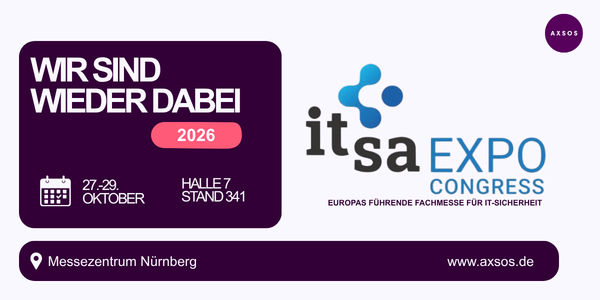
 CongressForum Frankenthal | Booth 6
 We look forward to exchanging ideas with you